4 min readrelease
The SOTA re-cut: thirteen reels re-filmed, and how we audit demo video
A frame-sampled VLM audit sent thirteen landing reels back into the capture harness — and the first audit pass itself was wrong about what it saw.
- #landing
- #media
- #release
The landing page ships twenty-four demo reels — every capability filmed in a real terminal session, one movie per dex entry. Before v0.0.23, we held all twenty-four to a second, harsher bar: a frame-sampled vision-model audit judging each reel against the strongest terminal marketing in the wild — and thirteen of them failed it. This post is the record of the re-capture round, and of the audit methodology we had to fix along the way, because the first audit pass flagged defects the videos did not have.
What the bar is, concretely
We surveyed what the best dev-tool pages actually ship in 2025-26. The interesting finding: most of them (Warp, Linear, Vercel, Raycast, Claude Code, Codex) now ship no home-page video at all — scroll-driven animation and stills have replaced hero reels. The strongest surviving exemplar for terminal product video is Amp: muted loops, ~30fps, ~1.3MB, poster-first, served from a static CDN. That is the bar the dex reels are held to: silent H.264+VP9 pairs, 1600px-class geometry, real sessions, no dead air, a story a senior engineer believes.
The frame-sampled audit scored each shipped reel on render quality, narrative flow, realism and marketing fitness — and returned thirteen lanes between 2 and 7 out of 10, each with a concrete named defect:
| Lane | The defect the audit caught |
|---|---|
| router | four identical static screens — the "open the detail" step selected nothing (the Router screen has no detail view) |
| parity-round | typed a harness test-case ("Reply with exactly: the parity round is live") instead of a developer's ask |
| overlays | opened cold on a slash command; 70% of the reel was dead air |
| mcp | rolled a bare d20 — arbitrary for a coding agent |
| websearch | the closing beat could land on the tool tail with the answer below the fold |
| wiki, cli-doctor | blank or cut-off closing frames |
| hero-bugfix | the mid-edit still raced the fast upstream and shipped byte-identical to the next beat |
| split-view | ended mid-story on a failed-then-fixed pair |
| sdlc | the machine-wide session listing cut off mid-render |
| browser-subagent | the report still was byte-identical to the done still (the anchor matched the child's own live labels) |
| subagent-explore | filmed the TUI's tmux extended-keys-format boot warning |
| harness | identical frames, no visible engine state change |
The re-cuts answer each defect with a real session, not a repair: router now walks its own selection onto auto-dream and Space-triggers it — the emerald toast and the running row are the beat, and the engine really runs the job:
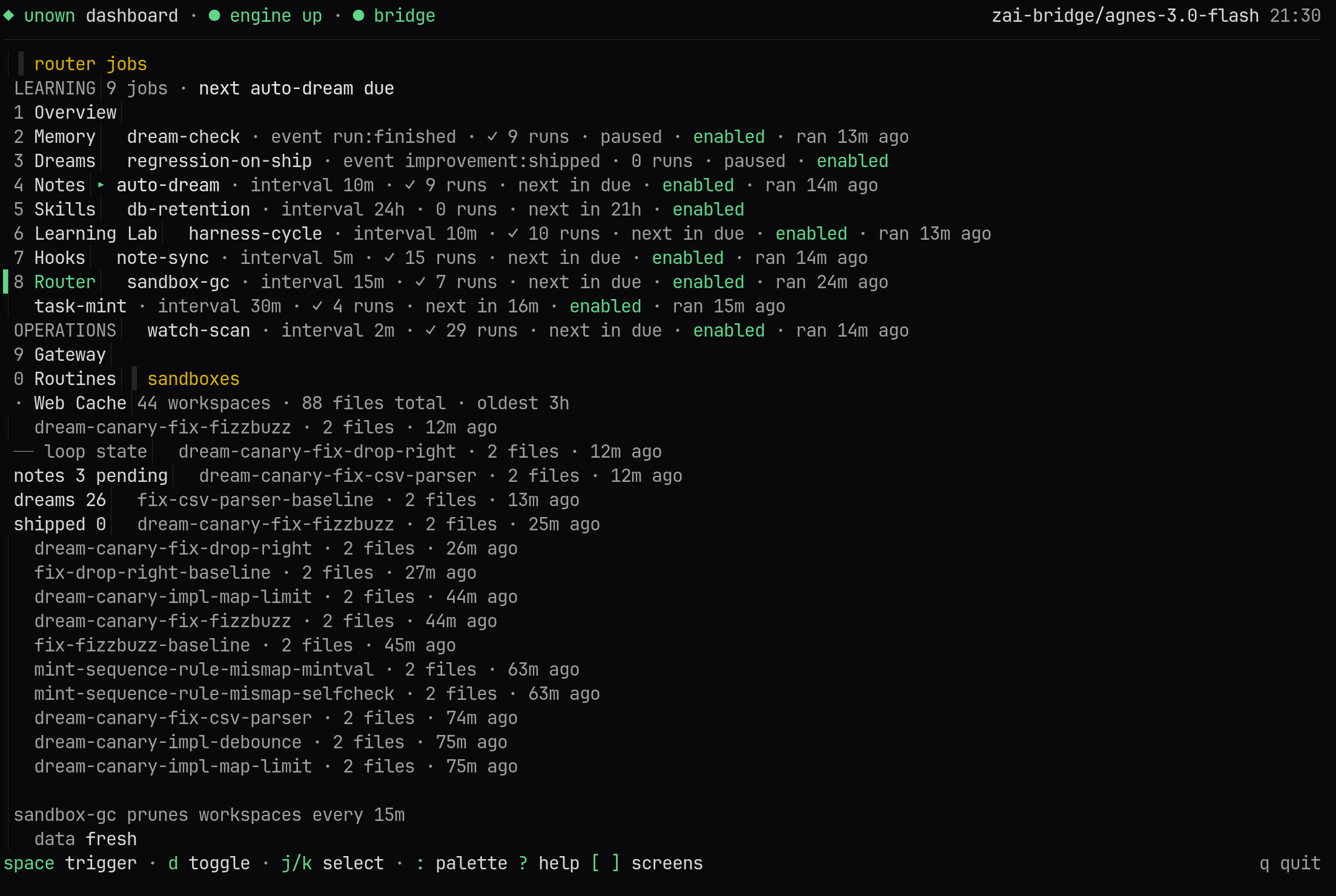
mcp's dice roll now picks the test fixture server's port and a second real turn checks the port is free. cli-doctor filmed last so the usage table carries the rows every earlier lane really burned. parity-round opens with a real docs question. overlays opens on the session itself. Every lane went back through the audited capture harness — real tmux pane, real engine, real model — and passed the three gates the repo has always required: pane-truth plus pixel stills, a frame scan, and VLM-sampled video review.
The audit that cried wolf
Here is the methodology story. After the re-cuts, we ran the same frame-sampled audit on the new reels — and it flagged nine of thirteen. But its evidence did not survive contact with signal analysis:
- "Completely black frames" in cli-doctor — measured with ffmpeg: the flagged tail has zero pixels below luma 5. It is the dark usage screen, and a full-resolution probe reads it back as a legible usage table.
- "Identical frames, dead air" — terminal recordings dwell on completed states between beats; the lanes the audit PASSED carry the same dwell profile as the ones it failed.
- "Text cut off, illegible" — the audit's 2×2 montage downscales each frame below legibility; the frames are 1600px and clean.
The method's flaw: four fixed-position samples from reels as short as four seconds, montage-compressed, judged without the context that terminal recordings legitimately hold still. The re-check — eight evenly-spaced frames per reel at readable scale, full-resolution probes for the flagged states — read all thirteen reels 8-10/10. The lesson is now part of the workflow: never audit a video by judging a mosaic of it.
A gate for the deploy, too
The re-cut round also closed a gap the audit made obvious: nothing checked
the deployed site's media. The e2e video gate proves every reel decodes on
the standalone build, but a broken deploy, a stale cache or a missing file
on Vercel was invisible until a visitor hit it. scripts/verify-deploy.mjs
now probes every landing media URL the rendered DOM references — reels'
webm+mp4, lazy posters, dashboard stills — for 200, the exact content type,
byte-range support and the long CDN cache, on every push.
The superseded thirteen cuts are archived in the capture root, and git history holds every byte — nothing was deleted. The dex on the landing page now plays the re-cut set: same 24 movies, all real sessions, every defect the audit named answered with a better take.
Spotted something wrong or worth adding? The record is the repo — open an issue.